
FRAGAS DO EUME
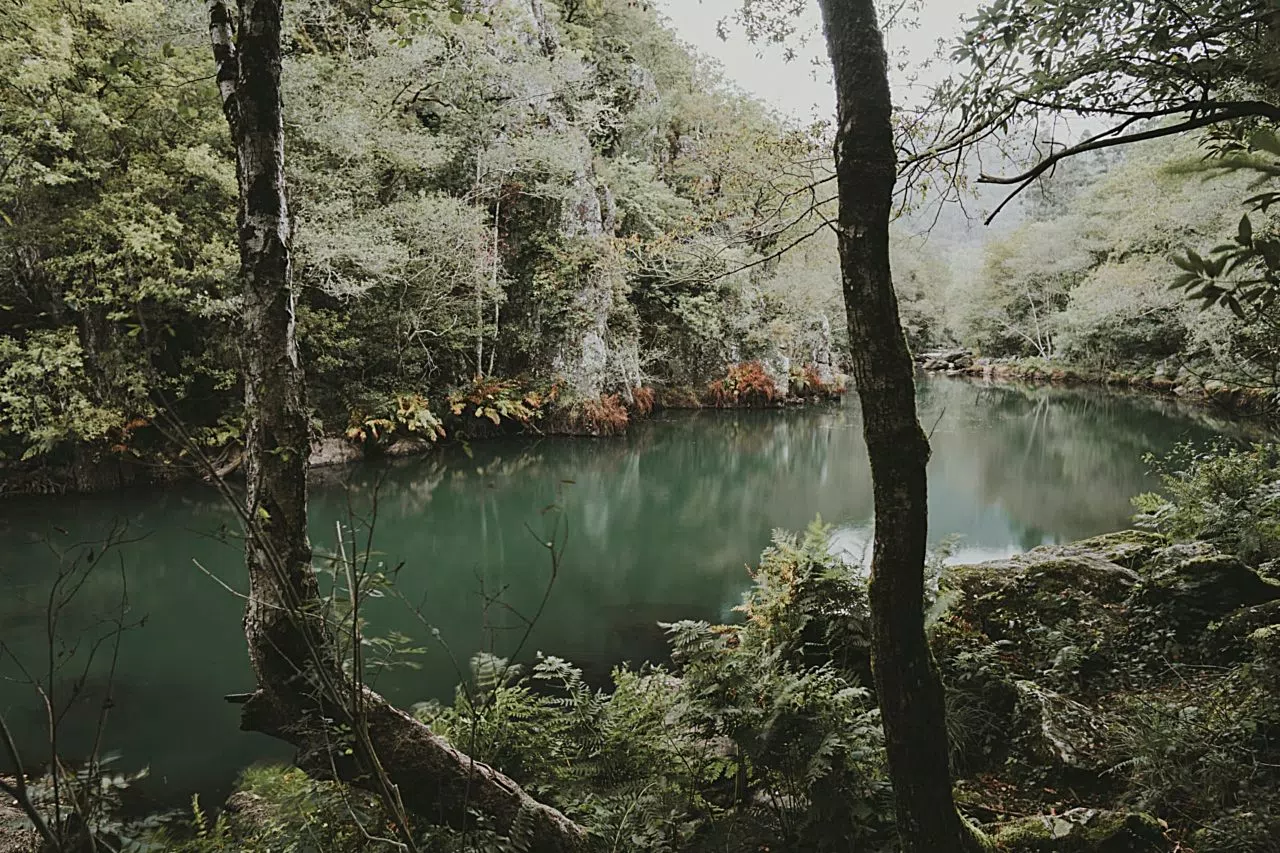
The "Fragas do Eume Natural Park" is one of the best-preserved Atlantic river forests in Europe. In its 9,000 hectares, fewer than 500 people live, giving an idea of the pristine state of these lush forests that follow the course of the Eume River. The park is shaped like a triangle, with its vertices and boundaries being As Pontes, Pontedeume, and Monfero.
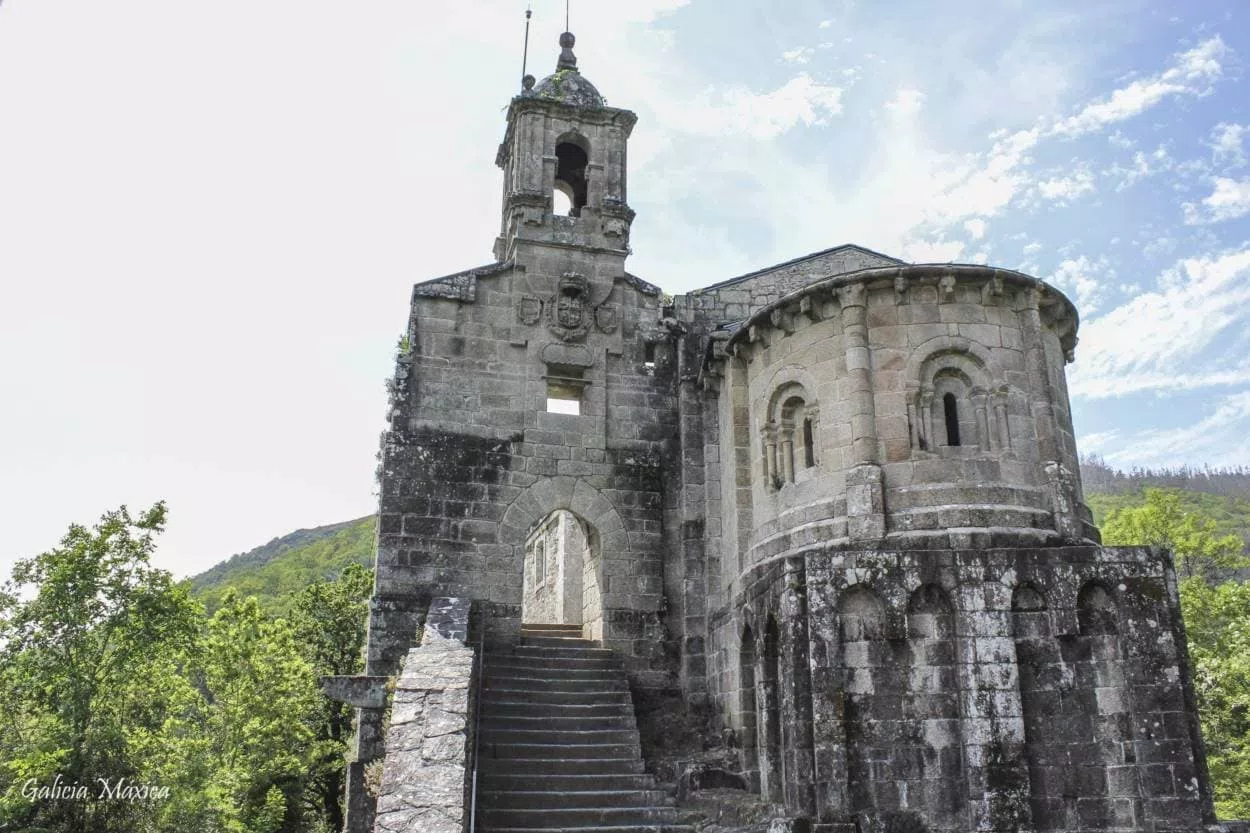
The best way to explore the park is on foot. If you know how to look, you might discover the playful elves that inhabit it. Here you can find oaks, poplars, ash trees, alders, more than 20 species of ferns, and 200 species of lichens. Sometimes the vegetation is so dense that it barely lets light through. But this shadowy and secretive forest is as generous as its waters, springs, and waterfalls. Here, there is not just green; there are landscapes of a thousand greens. Hidden in the heart of the forest is the Caaveiro Monastery, an ancient monastery with over 10 centuries of history and spectacular views of this magical "fraga."
The Forest of Dreams
The Eume River, totaling about a hundred kilometers, has carved a deep canyon in most of its middle and final course. The steep slopes, in some places with a drop of up to 300 meters, preserve the original vegetation of the Atlantic forests.
A true dream forest: thick and lush seasonal colors, a river that knows the adventure of salmon and seeks the proximity of the sea to become an estuary...
Because "fraga" means a forest with trees of different species. Oaks and chestnuts form the deciduous canopy, accompanied by birches and alders, ash trees and yews, hazelnuts and wild fruit trees; and the evergreen laurels, holly, and strawberry trees. All of them form a heterogeneous forest where each species occupies its place. The cork oaks, for example, have their northern limit in Galicia on these south-facing slopes. On the damp and shady banks, a large collection of lichens, mosses, and ferns is preserved, which are one of the jewels of climatic forests like the Eume, relics of the Tertiary Era.
Must-Visit Fragas do Eume
The park has four individual access points not connected to each other, the most visited being the one leading to the Caveeiro Monastery.
Due to the steepness of the slopes and the prominent cliffs, this route can only be accessed by following the river course through the Ombre fishing reserve, about 10 kilometers from Pontedeume. Every forest itinerary begins at the Cal Grande fishermen's refuge.
On weekends, there are vehicle restrictions, but there is public transport to the A Figueira bridge, the closest to the monastery. From this point, it takes about fifteen minutes on foot to climb to the recently restored Benedictine monastery of San Xoán de Caaveiro, a complete Romanesque art monument, in the heart of nature with panoramic views of the lush forests and sky. Entry is free with guided tours at intervals of approximately 45 minutes. There is no problem during weekends, holidays, and the high season. If you plan to visit the monastery outside these dates, request information. Opening hours change according to the season.
Once you have climbed the mountain and visited the monastery, you can continue the path descending for a short stretch to the murmur of the Sesín, which flows into the Eume, below the monastery. It is worth admiring the agitation of its pools and its green springs filtered by moss. The Sesín itself can be reached upstream by a different path. From the road that goes from Cabanas to As Pontes de García Rodríguez, take the detour at As Neves that leads to Gunxel, where the Sesín mills are located, and continue towards the old Ventureira hydroelectric plant. The track narrows here in the numerous curves of the wooded mountains of this route that connects, on the left bank, with the Rebordelo (Monfero) road.
The Eume dam is reached by the same Cabanas-As Pontes road, taking the Goente detour. It is an exceptional viewpoint over the waterfall that in winter becomes a true cascade due to the design of the gate. All this between vertical and bare granite walls but without the landscape losing at any time the charm of its richness.
On the left bank, we recommend visiting the Monfero Monastery with its baroque facade marbled with slate. Then we can enter the Park where the Frei Bermuz River flows into the tail of the Eume dam amidst lush vegetation.
The Sotavento Experimental Wind Farm is located at the top of the Serra da Loba, between Monfero and Xermade. It is dedicated to informing about renewable energies, with all kinds of activities and guided tours, and also offers bicycles.